
Introduction: The Spirit Calling
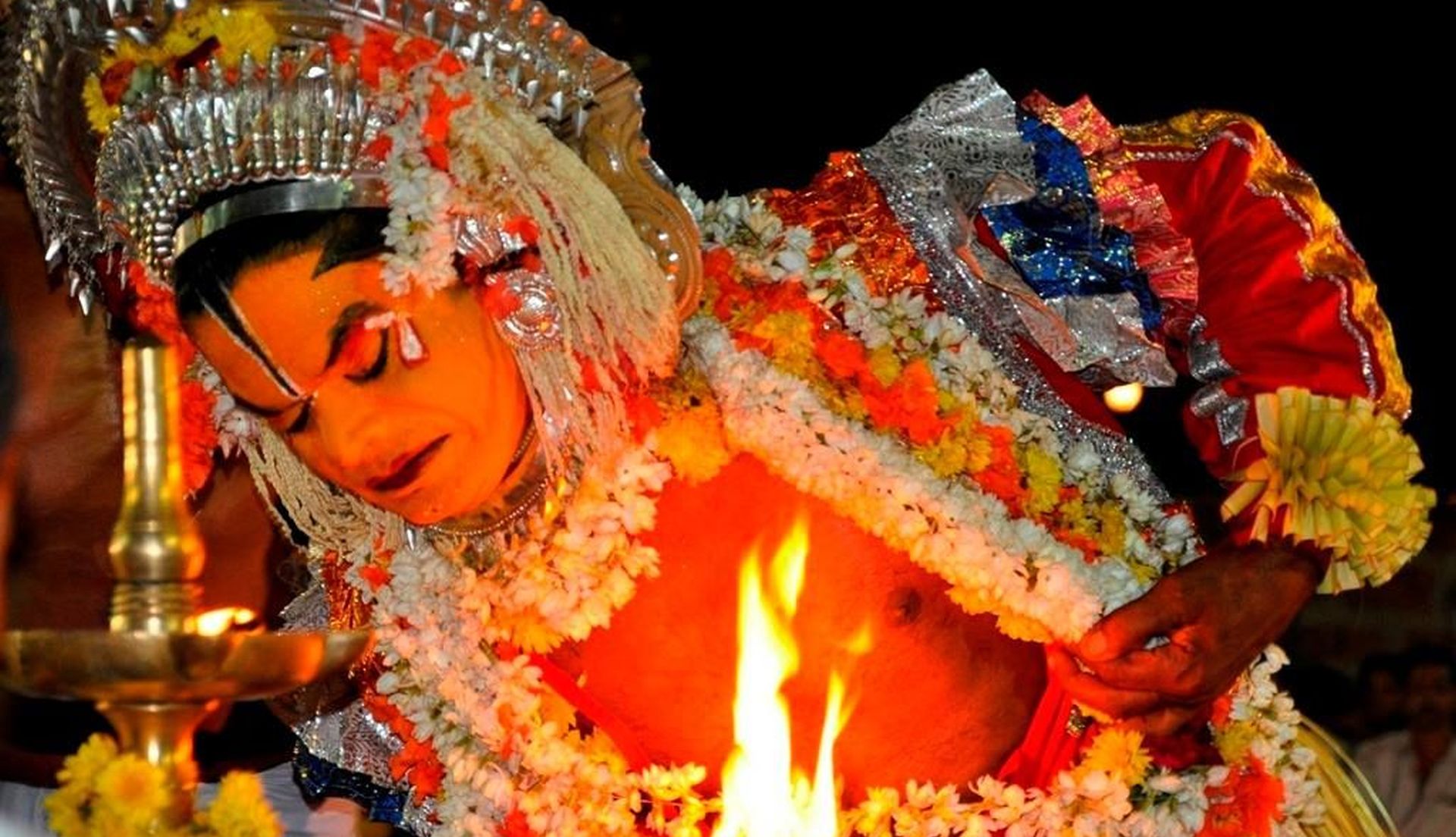
In the villages of Tulu Nadu (comprising Dakshina Kannada, Udupi, and parts of Kasaragod), night echoes with the rhythmic thunder of drums and the hypnotic intensity of a blazing torch. This is the stage for Bhoota Kola (also known as Daiva Aradhane or Nema), an ancient ritual performance where a human medium temporarily transforms into a sacred spirit, bridging the gap between the divine and the human world.
Bhoota Kola is far more than entertainment; it is a deep-rooted system of spirit worship and justice, unique to this region of coastal Karnataka. Understanding this tradition offers a profound insight into the region's culture, history, and spiritual ecology.
The Core Concept: Bhootas (Daivas) and Their Role
The term Bhoota literally means 'spirit' or 'ghost,' but in this context, it refers to a pantheon of semi-divine, protective spirits or deities, often called Daivas.
Protective Spirits: These spirits are not traditional Vedic gods but historical figures, heroes, nature deities, or ancestors who, after a noble or tragic death, attained divinity. They are the guardians of the land, the village, and its people.
The System of Justice: A key function of the Bhootas is to act as a dispenser of immediate, localized justice. Villagers approach the Daiva during the Kola with disputes, grievances, and oaths. The deity, speaking through the possessed medium, gives judgment, blesses the sick, and prophesies the future.
The Bond: The local community enters into a continuous covenant with the Bhoota, providing regular worship (Kola or Nema) in exchange for the spirit's protection and blessings for their crops and families.
The Ritual Performance: The Transformation of the Medium
The Kola ritual is an elaborate, all-night affair, often lasting from sunset until sunrise. The central figure is the Pātri or medium, who undergoes a rigorous and dramatic transformation.
1. Preparation and Adornment
The medium begins by performing purification rituals and deep meditation. The most striking element is the dramatic makeup and costume, often taking hours to apply.
Vibrant Costumes: The attire uses natural materials like palm leaves, banana stalks, and vibrant coloured cloth.
Intricate Face Painting: The highly stylized face paint (Bannada Vesha) is designed to erase the human identity of the medium and represent the specific deity they are invoking.
Ornamentation: Heavy jewelry, elaborate headdresses, and a terrifying array of ornamentation complete the look, symbolizing the immense power of the spirit.
2. The Invocation (The Possession)
The process of invocation is heralded by a team of drummers (Parva or Nalike community) who play powerful, specific rhythms (tenka-thitta style). The rhythmic drumming and the constant chanting lead the medium into a trance state.
Entering the Divine: As the medium takes the spirit into their body, they shed all human characteristics. The movements become dynamic, the voice changes completely, and they begin to dance vigorously around the sacred fire or pit.
The Kola Dance: The dance is frenetic and stylized, representing the myths and battles associated with that particular Daiva. The intensity of the performance is meant to prove the real presence of the spirit.
3. Dispensing Justice (The Darshan)
The most important phase is when the Daiva, speaking through the Pātri, interacts with the community. The medium listens to the pleas of the villagers, often issuing verdicts that are considered final and binding on the community.
Oral Tradition: The entire narrative of the Bhoota—its origin, journey, and powers—is chanted in rhythmic poetry known as Paddanas, ensuring the oral history is passed down.
Cultural Context and Modern Significance
Bhoota Kola is not static; it has adapted over time and remains deeply relevant today.
Ecological Significance: Many Bhootas are nature spirits, ensuring the protection of local forests, water bodies, and wildlife, thus reinforcing a strong ecological sensibility in the community.
Caste and Tradition: Traditionally, the role of the medium (Pātri) is often reserved for individuals from marginalized and oppressed communities, granting them a unique position of authority and immense respect within the hierarchical village structure, even if only for the duration of the ritual.
Bhoota Kola is a phenomenal living tradition that showcases the deep, syncretic nature of Indian spirituality—a vital, powerful cultural asset unique to the Tulu-speaking region of coastal Karnataka.


