
Hey, It's More Than Just Mithai! 🍬
When you think of an Indian festival, you picture new clothes, family gatherings, and of course, fireworks! But what you're really seeing is the world's most vibrant economic engine kicking into high gear. Our festivals, especially major ones like Diwali and Durga Puja, aren't just cultural celebrations; they are massive annual economic stimulus packages, injecting lakhs of crores of Indian Rupees (INR) into the economy every single year. Let's look at how this all works! 👇
Part 1: The Consumer Spending Surge 📈
This is where the real money moves. The festive season, running roughly from Raksha Bandhan to Diwali, is when most Indians plan their biggest purchases.
1. Retail Therapy for Prosperity ✨
The tradition of buying new items during festivals is linked to the idea of inviting prosperity. This belief drives insane sales across multiple sectors:
Gold and Jewellery: Festivals like Dhanteras see astronomical sales. People buy gold, silver, and even utensils, viewing it as an investment and a cultural requirement. A single day's sales on Dhanteras can often cross the ₹ 40,000 crore mark nationwide! That's a huge boost.
Automobiles and Electronics: Many families time the purchase of big-ticket items—cars, scooters, refrigerators, and large-screen TVs—for the auspicious days of the festive season. Companies often launch new models specifically during this window to capture that surge in spending.
Fashion and Home Decor: Everyone wants new clothes for Diwali and Puja! This creates a massive demand for textiles, tailoring, and garment industries. Plus, the deep cleaning and decorating rituals drive sales for paints, lights, and home furnishings.
2. The E-Commerce Explosion 📦
Online platforms like Amazon and Flipkart see their annual peak during the "Great Indian Festival" sales. This surge isn't limited to cities; it penetrates deep into Tier 2 and Tier 3 cities, making consumption truly pan-Indian. This digital spending contributes to a massive Gross Merchandise Value (GMV), often exceeding ₹ 5 lakh crore across the entire festive period.
Part 2: Creation of Jobs and Local Economy Support 🛠️
The festive season is a major source of temporary employment and revenue for the informal economy.
Job Creation: The entire logistics chain lights up! Millions of temporary jobs are created in packaging, transportation, delivery services, retail staffing, and hospitality. This is critical for supporting low-income families and temporary workers.
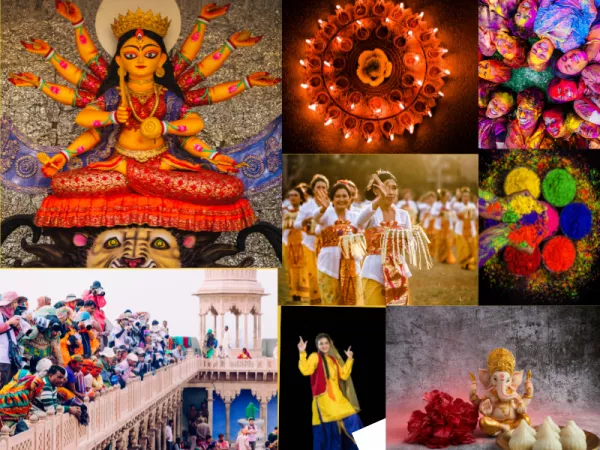
Boosting Local Artisans: Festivals are a lifeline for Micro, Small, and Medium Enterprises (MSMEs). Idols for Ganesh Chaturthi (a market worth hundreds of crores alone!), clay diyas for Diwali, decorative items, and sweets are all made by local artisans and small vendors. This ensures that a huge chunk of money remains circulating within local economies.
The Pandal Economy: Major events like Durga Puja in Kolkata have become huge industries, generating thousands of jobs for artists, electricians, caterers, and decorators, with the overall sector growing year-on-year.
Part 3: Cultural Tourism and Global Reach ✈️
Festivals are also major tourism draws, strengthening India’s cultural footprint globally.
Domestic Travel Spikes: People travel long distances to be with family, creating a huge surge in demand for trains, flights, and buses. This boosts the revenue of the entire transportation and hospitality sector.
International Appeal: Festivals like the Varanasi Diwali, the grand Durga Puja in West Bengal, and Ganesh Chaturthi in Mumbai draw foreign tourists specifically seeking authentic cultural experiences. These travelers spend on local accommodation, food, and souvenirs, bringing in crucial foreign exchange.
In short, festivals transform every part of the Indian marketplace—from a street vendor selling balloons to the biggest jewellery house. They're a fundamental, powerful, and joyous mechanism for economic growth! 🥳


